

Your Professional Ultrafiltration Water Treatment System Equipment Supplier
Industrial water treatment and commercial processing projects require reliable membrane filtration systems designed to remove suspended solids, colloids, and particulate matter from various water sources. Ultrafiltration (UF) systems serve as essential pretreatment stages before reverse osmosis (RO), core components in industrial process water loops, or dedicated units engineered to meet specific turbidity and particle-reduction targets. System configuration relies directly on raw water chemistry, feed water quality, required permeate flow rates, and downstream process specifications.
For project evaluation, equipment sizing, and technical proposals, industrial buyers can provide water analysis reports, target effluent quality, required daily capacity, and site utility conditions.
-
![Skid-Mounted Ultrafiltration System]() Skid-Mounted Ultrafiltration SystemA skid-mounted ultrafiltration system is an integrated water treatment assembly that mounts ultrafiltration membrane modules, process pumps, piping, valves, instrumentation, and control units onto...
-
![Bottled Water Ultrafiltration System]() Bottled Water Ultrafiltration SystemThe Industrial Ultrafiltration (UF) System utilizes hollow-fiber membrane technology to separate particulate matter and high-molecular-weight contaminants from industrial raw water sources.
-
![Wastewater Reuse Ultrafiltration System]() Wastewater Reuse Ultrafiltration SystemA Wastewater Reuse Ultrafiltration System utilizes semipermeable membrane technology to remove suspended solids, colloidal particles, and a substantial portion of microorganisms from appropriately...
-
![Reverse Osmosis Pretreatment Ultrafiltration System]() Reverse Osmosis Pretreatment Ultrafiltration SystemThe Reverse Osmosis Pretreatment Ultrafiltration System utilizes ultrafiltration (UF) membrane technology to remove suspended solids, colloidal particles, and high-molecular-weight contaminants...
-
![Drinking Water Ultrafiltration System]() Drinking Water Ultrafiltration SystemA drinking water ultrafiltration (UF) system utilizes hollow-fiber membrane technology to physically separate suspended solids, colloidal particles, and microorganisms within the membrane's...
-
![Industrial Ultrafiltration Water Treatment System]() Industrial Ultrafiltration Water Treatment SystemAn Industrial Ultrafiltration (UF) Water Treatment System is an engineered membrane filtration solution designed to remove suspended solids, colloidal matter, bacteria, and high-molecular-weight...


Key Parameters for Ultrafiltration System Selection
|
Selection Parameter |
Technical Detail to Confirm |
|
Feed Water Source |
Municipal supply, well water, surface water, or industrial process effluent |
|
Feed Water Quality |
Turbidity, total suspended solids (TSS), SDI, TOC, oil/grease, iron, and manganese |
|
Required Permeate Flow |
Normal operating demand, peak flow rate, and net daily production volume |
|
Target Water Quality |
Permeate turbidity limits, particle size cut-offs, or SDI requirements |
|
Membrane Specification |
Polyethersulfone (PES), PVDF, or PAN membrane chemistry and module configuration |
|
Operating Hydraulics |
Design flux rate, transmembrane pressure (TMP), recovery rate, and backwash frequency |
|
Cleaning & Maintenance |
Backwash intervals, chemical wash (CEB) protocols, and chemical compatibility |
|
Site & Utility Conditions |
Available footprint, indoor/outdoor placement, voltage/frequency, and drain capacity |
Skid-Mounted System Integration & Engineering Design
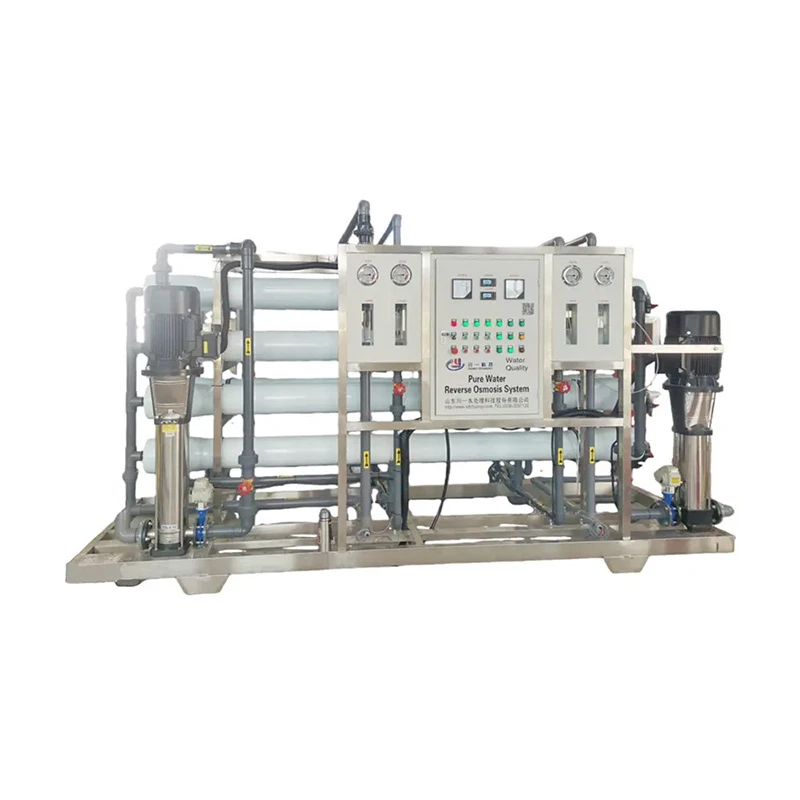
Industrial ultrafiltration systems are engineered for operational reliability and straightforward site integration. Rather than loose components, factory-tested, skid-mounted systems are supplied to minimize installation time and on-site piping labor.
A typical system architecture integrates:
Pretreatment Skids: Multi-media filters, disc filters, or fine strainers selected according to raw water solids loading.
Hydraulic Pressurization: Feed and booster pumps sized to deliver the required operating pressure and cross-flow velocity.
Membrane Racks: Hollow-fiber ultrafiltration modules housed in corrosion-resistant skids (SS304/SS316L or industrial-grade FRP/UPVC).
Valves & Manifolds: Automated pneumatic or motorized valves for backwashing, rinsing, and service cycles.
Instrumentation & Control: Pressure transmitters, differential pressure gauges, magnetic flow meters, turbidity analyzers, and PLC-based control panels with touchscreen HMI.
Chemical Cleaning (CIP) Skids: Integrated chemical dosing tanks and pumps for automated clean-in-place and enhanced backwash (CEB) protocols.
Primary Applications of Ultrafiltration Systems
Industrial Water Pretreatment (RO Pretreatment)
Deployed upstream of ion exchange systems or reverse osmosis units to reduce SDI (Silt Density Index) and turbidity. Consistent pretreatment performance protects downstream sensitive membranes from premature fouling and scaling.
Surface Water and Groundwater Treatment
Processes raw surface water or well water containing varying levels of suspended matter, organic complexes, and particulate contaminants. A raw water source analysis is mandatory to determine whether coagulation, pH adjustment, or pre-filtration is required.
Food and Beverage Production Water
Applied within industrial water loops where particulate reduction and reliable biological barriers are specified. System configurations comply with hygienic engineering standards matching specific production process requirements.
Municipal and Utility Water Reuse
Integrated into water reclamation and recycling loops to polish treated effluent by eliminating residual suspended solids before secondary disinfection stages.
Consumables, Maintenance & Lifecycle Support
Membrane Lifespan
Actual module service life depends heavily on raw water stability, adherence to recommended flux limits, and proper backwashing frequency.
Automated Maintenance Cycles
Built-in routine backwashes and automated air-scouring/CEB cycles help mitigate biological and particulate fouling, extending intervals between deep chemical cleanings (CIP).
Spare Parts Availability
Standardized industrial valves, instrumentation ports, and modular membrane elements simplify routine replacements and local maintenance.
Customization and Engineering Approach
Standardized equipment footprints rarely address every industrial water profile. Ultrafiltration projects are approached through systematic technical evaluation:

Water Chemistry Review
Analyzing raw water reports to identify scaling risks, foulants, and chemical compatibility.

Process Sizing
Calculating membrane surface area, design flux, and recovery rates based on verified feed conditions.
Mechanical Integration
Engineering skid-mounted frameworks, piping manifolds, and automation logic to match client plant layouts.
Manufacturing and Fabrication Standards
Mechanical integrity and fabrication practices determine long-term system durability under continuous industrial operation:
Skid Fabrication
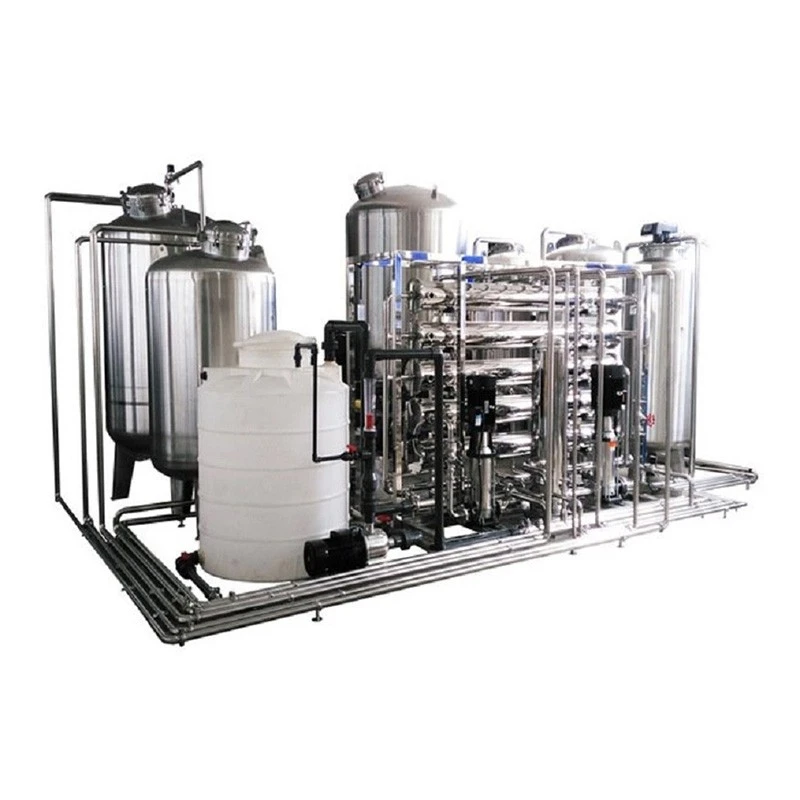
Structural frames, membrane racks, and mounting skids are constructed from corrosion-resistant materials, including stainless steel (SS304/SS316L) or heavy-duty structural steel treated with industrial protective coatings.
Manifold Piping Assembly
Piping networks—whether UPVC, schedule 80 PVC, or stainless steel—are assembled using qualified welding procedures or solvent cementing standards to prevent leaks under operating pressures.
Component Traceability
Critical components such as pumps, valves, instruments, and membrane modules are sourced from established industrial manufacturers to ensure compatibility and reliable replacement cycles.

Before equipment leaves the manufacturing facility, structural and operational verifications are conducted to minimize on-site installation risks:
Hydrostatic Pressure Testing: Piping manifolds and pressure vessels undergo pressure testing to verify mechanical integrity and joint stability.
Electrical and Control Verification: Control panels are powered on for dry-run testing, verifying PLC programming, sensor signal transmission, valve actuation sequences, and safety interlocks.
Dimensional and Skid Inspection: Overall footprint, port locations, and lifting points are verified against approved engineering drawings to ensure seamless site integration.
Frequently Asked Questions
We're well-known as one of the leading ultrafiltration water treatment system equipment manufacturers and suppliers in China for our quality products and competitive price. Please feel free to buy or wholesale ultrafiltration water treatment system equipment in stock here from our factory. Contact us for quotation.
Popular Products


