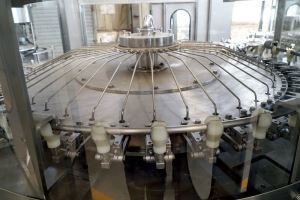


An integrated industrial production system engineered for the commercial-scale processing, tubular UHT sterilization, aseptic buffering, container sterilization, and aseptic filling of shelf-stable apple juice. Designed to handle clear, cloudy, NFC, or reconstituted formulations in PET or glass packaging without chemical preservatives or cold-chain distribution requirements.
Technical Specifications
|
Specification Parameter |
Engineering Configuration |
|
Raw Material & Product Types |
NFC Apple Juice, Reconstituted Juice, Clear Juice, Cloudy Juice, Juice Blends |
|
Line Output Capacity |
Engineered-to-order (e.g., 2,000 BPH to 24,000 BPH / Custom T/D processing rates) |
|
Filling Technology |
Aseptic Cold Filling (Volumetric Flow Meter or Piston Dosing) |
|
Thermal Sterilization |
Tubular UHT Sterilizer with Automated Product Regeneration |
|
Container Format Compatibility |
PET Bottles (Neck-handling transfer), Glass Bottles (Project-specific configuration) |
|
Product Contact Metallurgy |
AISI 316L Stainless Steel (Electropolished internal surfaces) |
|
Automation Architecture |
Industrial PLC Controller with Touchscreen HMI and SCADA Data Logging Interface |
|
Utility Requirements |
Saturated Steam, Chilled Water, Compressed Sterile Air, RO Water, Electrical Power |
Production Workflow
The manufacturing process relies on maintaining an unbroken sterile boundary from liquid processing to hermetic sealing. The standard automated line sequence comprises:
Fruit Preparation & Extraction: Multi-stage spray washing, roller sorting, and high-efficiency mechanical belt or pneumatic juice extraction.
Clarification, Filtration & Homogenization: Tailored per product type. Clear juice undergoes enzymatic treatment and ultra-filtration; cloudy juice passes through high-pressure homogenization to maintain long-term suspension stability.
Standardization & Vacuum Deaeration: Brix/acidity adjustment coupled with continuous vacuum degassing to eliminate dissolved oxygen and prevent oxidation-induced flavor degradation.
Tubular UHT Thermal Treatment: Continuous sanitary processing via concentric tubular heat exchangers to achieve commercial sterility.
Aseptic Buffer Storage: Pressure-maintained sterile vessel acting as a hydraulic buffer between continuous UHT sterilization and intermittent filling.
Container & Closure Sterilization: Integrated bottle and cap sanitization using verified peracetic acid (PAA) or hydrogen peroxide (H2O2) sterilizing agents paired with sterile rinsing.
Aseptic Filling & Sealing: Rotary monoblock operation housed within a positive-pressure sterile cabinet (HEPA filtered) to eliminate post-contamination risks.
Downstream Packaging: Automated sleeve labeling, film wrapping, case packing, and palletizing systems.
Aseptic Integrity & Process Control
Maintaining absolute commercial sterility requires rigorous environmental and mechanical safeguards embedded directly into the production architecture:
Sterile Air Barriers: Continuous positive pressure maintained inside the aseptic enclosure via high-efficiency particulate air (HEPA) filtration units to prevent ambient air ingress.
Sterilant Concentration Monitoring: Automated sensors track and verify sterilant concentration, contact time, and temperature during container and closure sterilization phases.
Hygienic Pipeline Design: All product-contact surfaces utilize electropolished AISI 316L stainless steel with a surface roughness of Ra <= 0.4 um and orbital-welded sanitary connections.
Safe Failure Modes: Automated steam-barrier valve arrangements ensure that any transient loss of sterile pressure instantly halts filling and triggers safe-state diversion.
Quality Control, Testing & Compliance Standards
Ensuring batch consistency and regulatory compliance in aseptic liquid processing requires rigorous validation protocols and standardized testing procedures:
Microbiological Validation: Automated testing routines and incubator monitoring to verify commercial sterility, ensuring absence of spore-forming bacteria, yeasts, and molds prior to commercial distribution.
Material Traceability: Complete mill test certificates (EN 10204 3.1) for all product-contact stainless steel components, valves, and gaskets to guarantee absolute corrosion resistance and food safety compliance.
Pre-Shipment Factory Acceptance Testing (FAT): Rigorous dry-run and water-run testing protocols conducted at the manufacturing facility to verify mechanical synchronization, throughput stability, and automation responsiveness before dispatch.
Regulatory Standard Compliance: Equipment designed and manufactured in accordance with international sanitary standards, supporting compliance with FDA, CE, and EHEDG hygienic engineering guidelines.
FAQ
Q: What are the key operational differences between aseptic filling and hot filling?
A: Aseptic filling cools treated juice prior to introduction into pre-sterilized containers, drastically reducing cumulative thermal load. This preserves native flavor compounds, color, and nutritional value while allowing lightweight PET container formats without thermal collapse risks.
Q: Can a single production line run both clear and cloudy apple juice?
A: Yes, provided the line engineering incorporates switchable processing branches. While clear juice utilizes filtration skids, cloudy juice bypasses filtration in favor of homogenization. Recipe-based software automation manages switching parameters safely.
Q: How is bottle and cap sterilization executed inside the monoblock?
A: Empty PET bottles and closures pass through a sterile treatment chamber where they are exposed to a verified concentration of sterilizing agents (such as atomized peracetic acid or hydrogen peroxide vapor) followed by sterile rinsing or hot-air drying.
Q: What documentation package is delivered with the production line?
A: Engineering packages include comprehensive P&ID schematics, electrical wiring diagrams, material traceability certificates (3.1 certificates), CIP/SIP validation test reports, and complete operation/maintenance manuals.
Hot Tags: aseptic apple juice filling line, China aseptic apple juice filling line manufacturers, suppliers, factory